- Zip Into Multiple Files
- Free Zip File For Mac
- Mac Zip Multiple Files Individually
- Mac Zip Multiple Files With Password
- Zip Multiple Files C#
- Extract Multiple Zip Files Mac
- In the drop-down menu that appears, click on 'Compress.' A zip file will be created in the same directory as the original folder. How to Zip Files Using Mac Terminal. You can Zip your files in Mac's Terminal in different ways, but the simplest method will be outlined here for you. Open up a Finder window.
- Sudo apt-get install zip. I see from man zip that it allows me to use a file list: -@ file lists. If a file list is specified as -@ Not on MacOS, zip takes the list of input files from standard input instead of from the command line. For example, zip -@ foo. So I created zip.lst which looks like this.
It is fairly easy to compress a single file or multiple files and folders into a ZIP file archive on your Mac. You can also decomp.
Files you download from the Internet are often compressed or zipped so that they take up less space and arrive much faster than files that haven’t been compressed. You can easily identify compressed files by their extensions, such as .zip (a common standard used in OS X and Windows) and .sit. Before you can use these files, you must learn how to unzip files on mac computers for proper access – luckily the process isn’t that complicated!
How to unzip files on mac computers
To batch convert RAR to Zip, just select multiple files at the same time. Control-click the archive or selected files in it and choose Extract or Decompress. Alternatively, you can highlight files and click Extract in the toolbar. Choose a location on your Mac to save the decompressed files. Zip -r archivename.zip foldertocompress. Unzip archivename.zip. If you want to make a zip without those invisible Mac resource files such as “MACOSX” or “.Filename” and.ds store files, use the “-X” option in the command so: zip -r -X archivename.zip foldertocompress.
Unzipping a file on a mac computer is user-friendly and intuitive. To unzip files on a mac, simply follow the steps below:
- How to Open and Unzip a Zip File on Mac. Opening a zip file to view its contents is pretty straightforward. Just double-click on the file, and it will open. The zip file can still be seen in the location folder, but an unzipped copy will also be created in the same location.
- Download WinZip for free – The world's #1 zip file utility to instantly zip or unzip files, share files quickly through email, and much more.
- Open zip files free download - Zip Mac Files For a PC, Express Zip Free File Compressor for Mac, Express Zip Plus for Mac, and many more programs.
- Double click the zipped file.
- The file will automatically be decompressed by Archive Utility into the same folder the compressed file is in.
- Access the extracted files by clicking the appropriate icons.
Alternatively, if the method above does not work, you can right-click on the .zip package, and select Open With > Archive Utility (default).
Apple and third party software
Apple used to include a program called StuffIt Expander to decompress zipped files, but doesn’t now that OS X lets you unzip files (but not .sit files). However, StuffIt from SmithMicro Software still comes in handy for opening other types of compressed files, notably the .sit or .sitx compressed types. Go to www.stuffit-expander.com or www.stuffit.com/mac/index.html to download a free version of the software or to splurge for the Deluxe version. In addition to compressing files, StuffIt Deluxe lets you encrypt and back up files.
Meanwhile, you can archive or create your own .zip files through OS X, which is useful if you’re e-mailing a number of meaty files to a friend. Right-click (or Ctrl-click) files you want to compress inside Finder and choose Compress Filename. The newly compressed files carry the .zip extension. The archive is created in the same location as the original file and is named originalfilename.zip. You can also choose File→Compress. If you compress a lot of files at once, the archive takes the name Archive.zip.
By default, compressed files are opened with the Archive Utility. It appears in the Dock (in Leopard) while the files are being unsqueezed, unless you choose to open them with Stuffit Expander or some other program.
How to zip files on a mac
On the flip side, you can also archive or create your own .zip files through OS X, which is useful if you’re e-mailing a number of meaty files to a client or friend. Follow the step-by-step instructions below to easily zip files on a mac:
- Right-click or Ctrl-click the multiple files you want to compress (whether on the desktop or inside the Finder).
- Select Compress Filename from the pop-up menu.
- The files are now compressed in a .zip extension and the archive is created in the same location as the original file name, except with the .zip appended to its name.
On some Apple computers, you can also compress a file by simply choosing File→Compress. If you compress a lot of files at once, the archive takes the name Archive.zip.
Zip File Mac Download
Clean and Optimize Your Mac to Improve Performance with Outbyte MacRepairPicasa 3 download mac os x.

In order to use the program, it needs to be purchased and activated first.
Developed for macOS
See more information about Outbyte and uninstall instructions. Please review EULA and Privacy Policy Outbyte.When you first purchased your Mac, one of the biggest deciding factors you considered is most probably disk space. But as years go by using your computer, its disk space seems to become smaller and smaller by the day, no matter how diligently you delete unneeded files and unused programs. In the computing world, one could never have too much storage space. There are some ways you could save space on your Mac, including manually deleting files and programs or automatically doing so with the help of apps designed to clean out junk such as Outbyte MacRepair. Another way — albeit less popular — to free up Mac space is to compress and zip files. In this article, we’ll show you how to zip a file on Mac, unzip it, and protect it with a password.
How to Zip a File on Mac
Converting any standard file to a compressed zip file the traditional way is effortless. You can do this to photos, videos, audio files, and documents, among others. Here are the steps:
- In Finder, look for the file or folder you want to compress and zip. Right-click or Ctrl-click on it.
- Select “Compress [name of file or folder].”
- Wait for the compression process to finish. Larger files may take time to end compressing.
- Once done, a new .zip file will appear in the same location as the original file or folder. You will also hear a system alert tone to notify you of the recently completed compression.
Zip Into Multiple Files
You can now send these compressed files or folders via email. You may also choose to delete the original files and folders if you want to save on disk space, but note that you can’t readily open or view the zipped versions. You’ll need to unzip them first (more on that later).
How to Zip Multiple Files on Mac
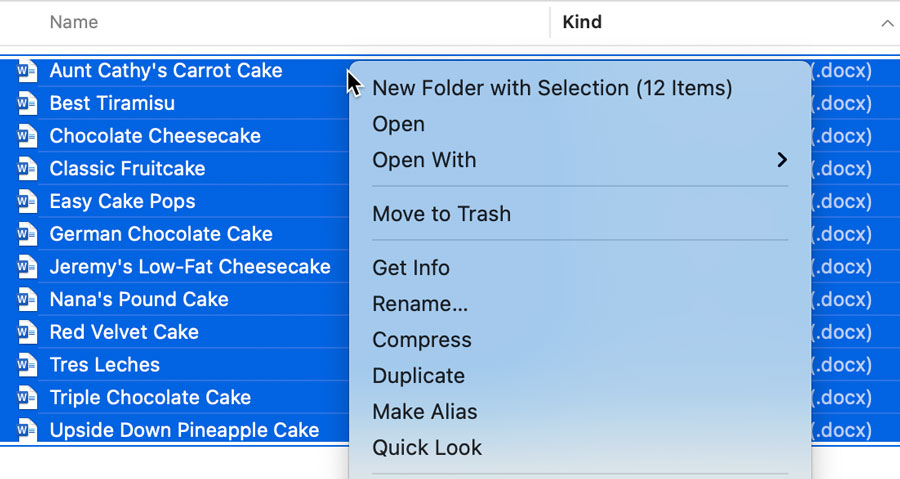
How to download celtx for mac. You can also compress multiple files and/or folders. Here’s how:
- First, you have to create a new folder in Finder or Desktop. Press Shift + Command (CMD) + N).
- Name the new folder.
- Drag the files you want to zip together to the folder you just created. IMPORTANT: Before dropping the files, hold down Alt to make sure that the files are copied to the new folder.
- Once all the files you want to zip together are in the folder, Ctrl+Click on the folder, then choose Compress.
- A new zip file should now be created.
- Drag the folder (not the zip file) you created earlier to the Trash.
How to Change the Save Location of Your Zip Files
Free Zip File For Mac
By default, a zipped file or folder will be saved in the same place where the original is saved. But, you may also choose a dedicated destination for all of your compressed files. It is done by opening the compression app. In Mac, it’s called the Archive Utility. A simple Spotlight search can easily find it. After searching for the app on Spotlight, open it. Click the Archive Utility drop-down menu at the top of the screen, then click Preferences. Select the menu named Save archive, then select into. Next, choose your desired destination.
How to Open and Unzip a Zip File on Mac
Opening a zip file to view its contents is pretty straightforward. Just double-click on the file, and it will open. The zip file can still be seen in the location folder, but an unzipped copy will also be created in the same location. Meanwhile, if were sent a compressed file in a format other than zipping, such as .rar, you’ll need to use an app to decompress it, such as The Unarchiver. You can get this app for free from the App Store. Once installed, the app automatically works pretty much exactly like your Mac’s built-in zip tool. Just double-click the archive file, then the files and folders will be extracted and saved in the same location as the archive file.
How to Enable or Disable a Browser From Extracting Zipped ‘Safe’ Files Automatically
Some web browsers, such as Safari, automatically unzip downloaded compressed files that they consider to be safe by default. In Safari, these safe files include movies, pictures, sounds, PDFs, text documents, and archives. However, if you prefer to decompress downloaded zip files yourself, you can opt out of this feature.
In Safari, go to the drop-down menu. Locate and select Preferences, then click the General tab. Down below the window, you will see “Open “safe” files after downloading.” Leave the box checked if you want Safari to decompress these safe files automatically. Otherwise, untick the box.
How to Protect Your Zip Files With a Password
Now, here’s the more challenging bit. If you want to conceal some of your files, you can do so protecting it with a password. It is an excellent solution for highly confidential files since you probably won’t bother going through the quite complicated process to protect regular files. You may also do this for files that you are about to send through an unsecured messaging or mailing system. When you encrypt a zip file or folder, anyone who is trying to access the file using whether a Mac or PC will have to enter the password you create. To protect your zip file with a password, you’ll have to do it in the Terminal. As an example, let’s assume that the file is named softwaretested.jpg. Now, follow these steps:
- Open Terminal by going to Applications > Utilities > Terminal. You may also search for it on Spotlight.
- Type in cd Desktop then hit Enter/Return.
- Type in zip -e softwaretested.zip softwaretested.jpg, then hit Enter/Return.
- At this point, Terminal will ask you for the password. Type in the password you have in mind. Note that it will appear as if nothing is happening, but it’s designed this way so that the password will be concealed.
- When done typing the password, hit Enter/Return.
- The Terminal will ask you to verify the password. Type it again, then hit Enter/Return.
- Let Terminal finish the job. Status progress will be shown in the form of a percentage. When done, close the Terminal window.
A Note on Naming Your Zip Files
If you plan to protect a zip file or folder with a password, it is recommended that you don’t put spaces on the file name as much as possible. Telling the Terminal to password-protect a file with a name that has spaces will require you to do extra work. For instance, if your filename is software tested.jpg, you’ll have to type the code so as:
zip -e software tested.zip software tested.jpg
It’s not that difficult, but you should take extra caution whenever dealing with a file with spaces on its filename.
How to Password-Protect a Zip Folder
If it’s a zip folder you want to put a password on, change the -e extension to -er. For instance, zip -er softwaretested.zip softwaretested.
How to Open a Password-Protected Zip File or Folder
If you were sent a password-protected zip file or want to open your encrypted files, just double-click on them as usual, then enter the password when asked.
Zipping files on Mac is just one of the ways you can save space on your computer and compress big files and folders before sending them to someone else. Know of other file compression tips and methods? Share them with us in the comments below!
See more information about Outbyte and uninstall instructions. Please review EULA and Privacy Policy Outbyte.
Since macOS is based on Unix there are a number of ways to compress files and folders within the filing system using Unix based application code, below are a few options using the Terminal or command line interface (cli). The default command line application interface in macOS is the Terminal and is stored in /Applications/Utilities.
File and folder compression saves on file size and ensures the contents are captured and delivered or stored as one monolithic file. A compressed file which contains files and folders is generally referred to as an archive. Here are some built-in compression applications you can use including zip, tar, gz, bz2, gz and dmg.
ZIP – Cross Platform
Mac Zip Multiple Files Individually
First up is ZIP one of the most commonly used compression techniques used across all platforms
Mac Zip Multiple Files With Password
To compress
To extract
If you want to make a zip without those invisible Mac resource files such as “_MACOSX” or “._Filename” and .ds store files, use the “-X” option in the command so:
TAR.GZ – Cross Platform
Second up is TAR, an old favorite on Unix/Linux – you add the GZ for the compression – compresses tighter than zip
Zip Multiple Files C#
To compress
To extract
TAR.BZ2 – Cross Platform
A variation on TAR GZ but with better compression than both tar.gz and zip.
To compress
To extract
GZ
Without the tar
To extract
DMG – macOS Only
This one is macOSnative only – for a GUI interface use /Applications/Utilities/Disk Utility – for command line use:

To create
To mount

To view
Extract Multiple Zip Files Mac
To Eject
You can also use a number of different formats for creating a .dmg
- UDZO – Compressed image (default)
- UDRO – Read-only image
- UDBZ – Better compressed image
- UDRW – Read/Write image
- UDTO – DVD disk image
That’s the low down, the more common compression packages available will typically be covered in one of the above.
Comments are closed.